Longer hold times, fewer SKUs, smoother audits.
The Challenge
New England Biolabs wins big by replacing Styrofoam.
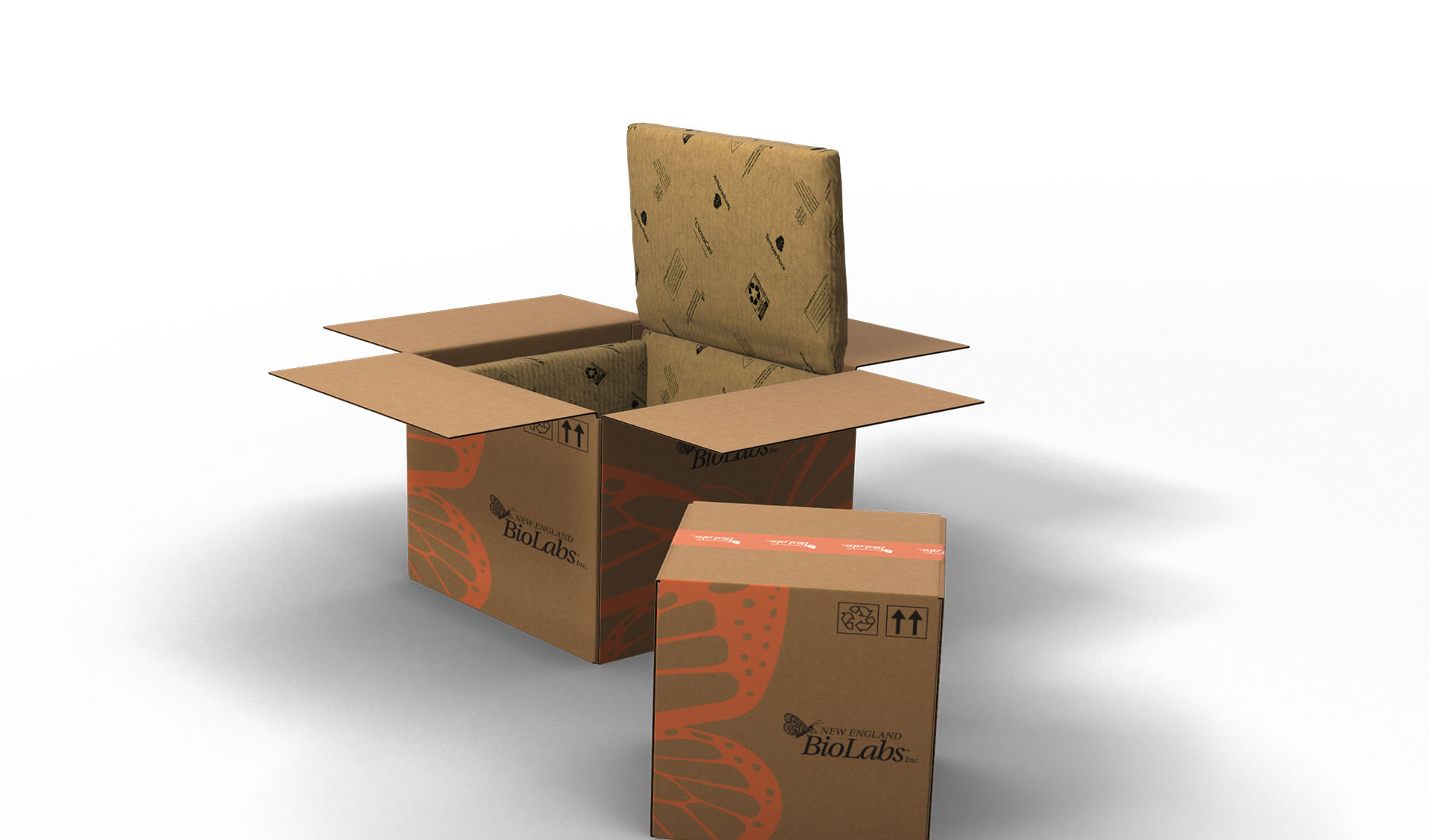
New England Biolabs® wanted to reduce its environmental impact by replacing Expanded Polystyrene Foam, or “EPS,” (or more commonly known as Styrofoam™) as the packaging insulation for shipments of its valuable reagents used in life science research.
While sustainability was the main driver for making the change, NEB® was also hoping to see gains in terms of operational and economic efficiency.
New England Biolabs and TemperPack teams worked together to understand the efficacy of its existing pack-out and develop a custom solution using ClimaCell thermal liners.
Once we started working with the TemperPack team, we realized that neither our existing EPS pack-out nor our existing cold chain operation were as effective or efficient as they could be. The longer we've worked together, the more we've found ways to optimize what we do.
Results
The new validated pack-outs using ClimaCell maintained safe temperature longer than their previous pack-outs using EPS.
Working with TemperPack engineers, NEB consolidated two cooler sizes into one, which created significant operational efficiencies.
By replacing the majority of their shipments with recyclable ClimaCell, NEB was able to reduce the time spent processing EPS coolers that are returned to their facilities.
Other case studies
See all