Why Switch

Packaging that actually disappears. Just add water.

Unlike plastic foams, Green Cell Foam™ is easy to get rid of. Compost it—or dissolve it in water. Your choice.

How to Dispose of Your Green Cell Foam panels.

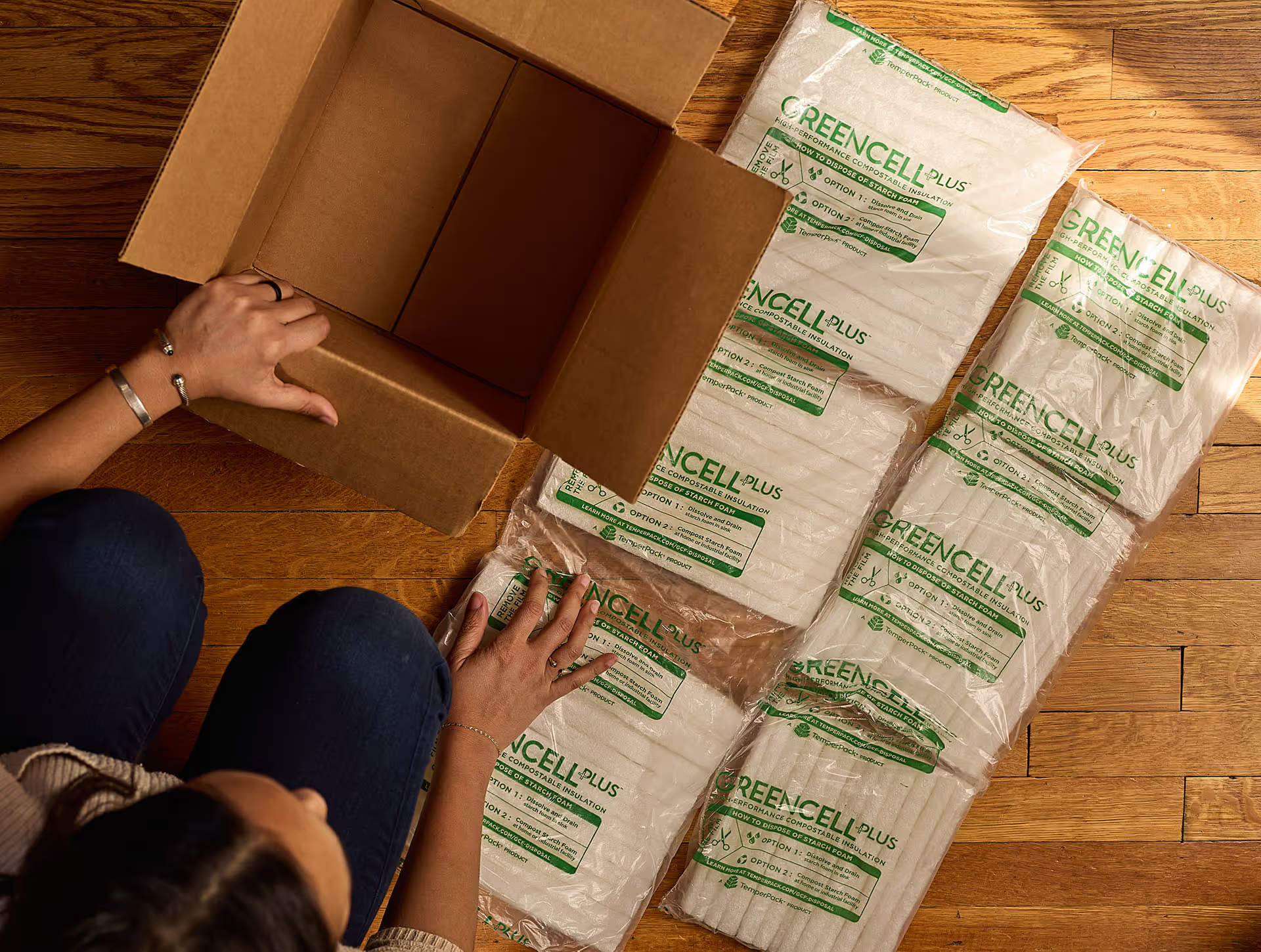
Remove Green Cell Foam liners from shipping box.
Get ready
Take the liners out of the box and remove any plastic encapsulation. Check locally for a location that accepts plastic films for recycling.
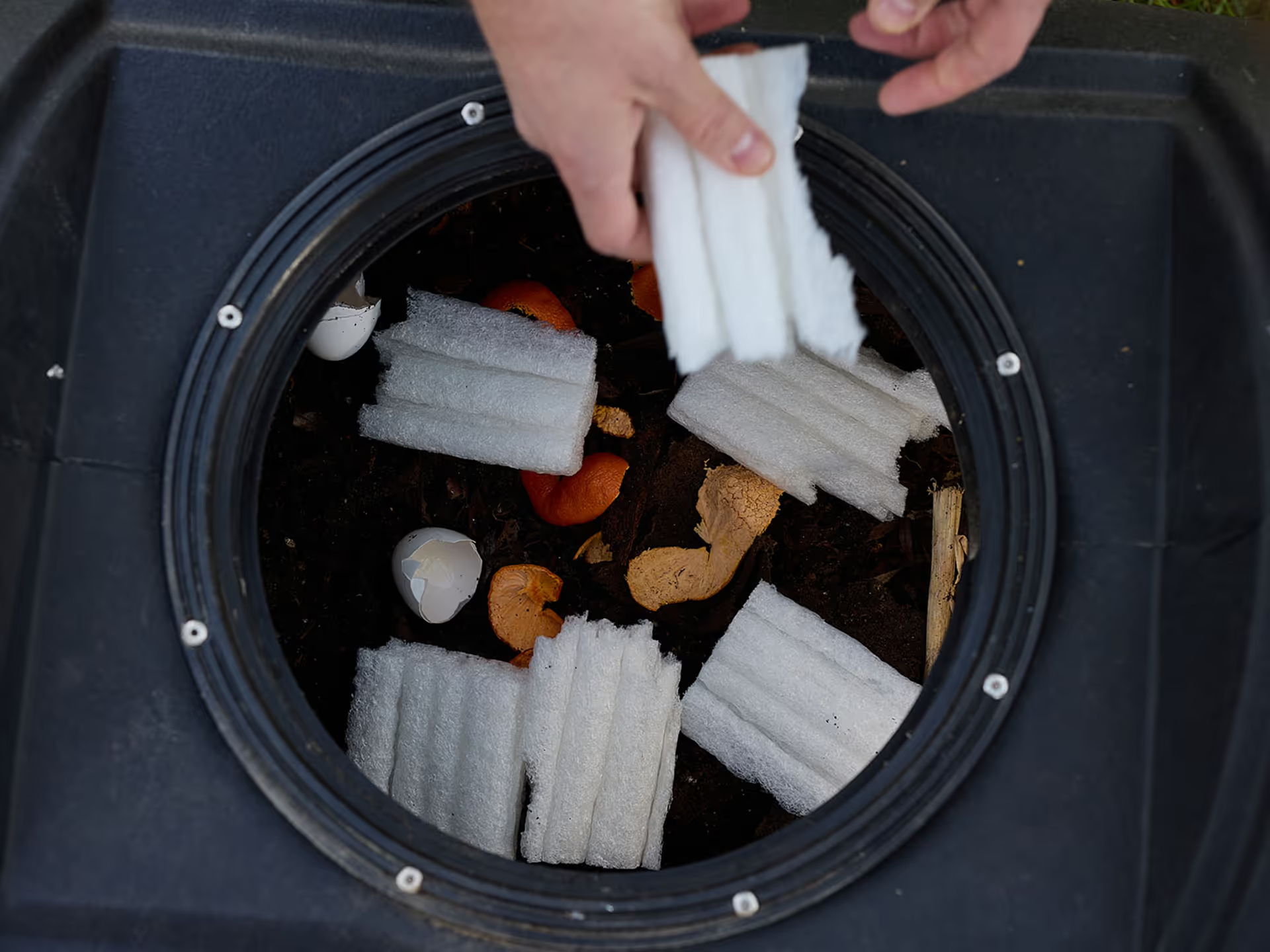
Composting green cell foam in home compost bin.
Option #1: Compost the liner
Green Cell Foam is certified for both home and industrial composting. Composting allows the material to break down naturally and return nutrients to the soil.
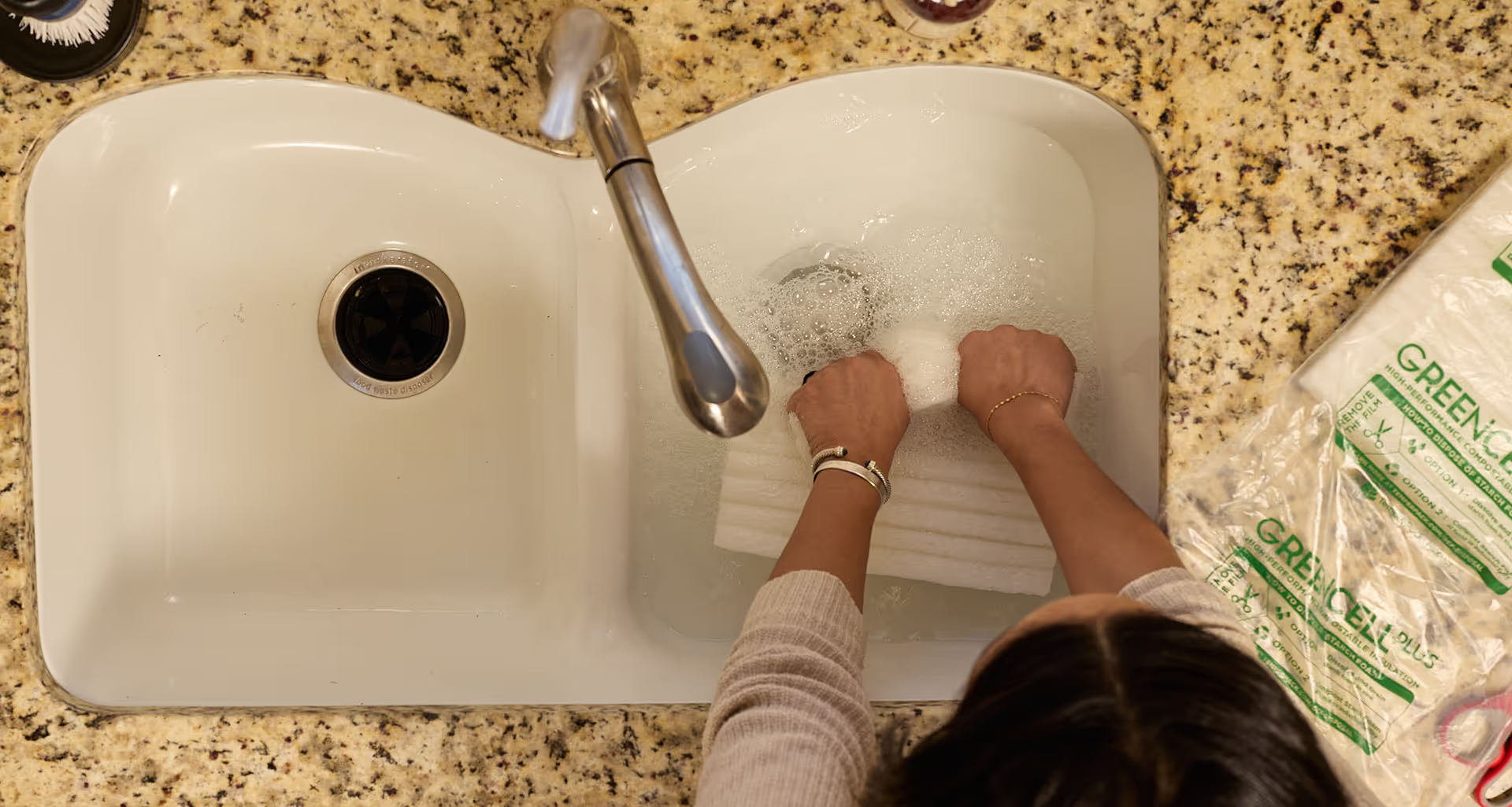
Green Cell Foam dissolving in kitchen sink.
Option #2: Dissolve it in your kitchen sink
Plug the kitchen sink, add several inches of warm water, place the liner in the sink, and gently agitate. The material will dissolve within minutes. Drain and rinse thoroughly.

Be careful not to:

Dissolve on asphalt

Don’t dissolve on asphalt, concrete, or other hard surfaces. The foam could cause damage as it dries.

Dissolve in bathtub

Don’t dissolve in the tub. The starch will get slick and could cause you to slip.

Place in recycling bin

Don’t put the foam panels in curbside recycling. They are valuable for composting, not recycling.

Trees, river and road overhead shot

Disposal: A deepish dive.

Certified compostable

Green Cell Foam is certified OK Home and OK Industrial Compost by TÜV Austria and is made from over 90% plants and air.

Water-soluble and septic-safe

Green Cell Foam meets ISO 14853 standards for aqueous anaerobic biodegradation and has been independently tested for septic system compatibility.

Designed for real-world disposal

Developed to break down safely under aerobic and anaerobic conditions, Green Cell Foam avoids the long-term persistence and microplastic risk associated with EPS foam, often known as StyrofoamTM.

Proof & Performance.

01

End of Life

Certified compostable and water-soluble at home. No dump trucks required. 

02

Reduced Environmental Impact

Plant-based composition avoids petroleum inputs and persistent plastic waste.

03

Thermal Performance

Engineered to meet demanding cold-chain performance requirements without EPS.

04

At Scale

Manufactured at commercial scale to support high-volume fulfillment and distribution.

Frequently asked questions

Is Green Cell Foam insulation safe to handle?

Absolutely. It is completely safe to touch. It might leave behind a bit of harmless powder, which is just residue from the vegetable starch.

What's in Green Cell Foam?

The foam is made with a proprietary blend of vegetable starch and non-toxic ingredients. It s USDA Certified Biobased. I

How much water should I use to dissolve the foam?

We recommend using enough warm water to completely submerge the foam in your kitchen sink so it’s easier to dissolve. Then simply rinse your sink until there is no residue.

Can I feed it to birds and wildlife or people and pets?

Green Cell Foam is not intended for human or animal consumption. Please dispose responsibly and keep away from pets.

Can I water my plants with Green Cell Foam water?

Yes, it is made from plant-based starch, so when it biodegrades or dissolves it will enrich the soil.

Does it contain PLA?

Unlike some other compostable packaging, Green Cell Foam does not contain PLA (polylactid acid).

What do I do with the plastic encapsulation?

Sometimes, our liners are encapsulated in plastic to help them stand up to condensation. Remove the plastic and recycle it at local drop-off recycling program that accepts #4 plastics. Or displose of it in the trash.

What happens if I put it in the trash?

The foam will biodegrade in a landfill, unlike Styrofoam™. We recommend composting as it diverts 9% and sink disposal diverts 21% of the carbon footprint compared to sending to a landfill.

Get in Touch

If you have questions or feedback about Green Cell Foam, or if you want to join our efforts to advocate for increased recycling, please send us a note.  
Contact us

Get in Touch

Please send us a note using the form below.

Overhead pine trees.